Rain After Work: Plan an Evening with a Second Route
Plan a rainy after-work outing in Bảo Lộc with a main activity, a nearby alternative, and a clear stopping point, so the evening can flex without pressure.
Rain after work in Bảo Lộc can turn a simple outing into a choice between waiting, changing plans, or heading home. A flexible rainy after-work plan starts with one main activity, one nearby alternative, and a clear point at which you call it a night.
The second route is not an elaborate backup itinerary. It is a nearby option you can choose without turning a tired evening into more scheduling. That matters after a long service shift, a late handover, or a day when you have only a little energy left for casino-style entertainment.
What kind of evening do you have room for?
Start with your actual condition after work, not the evening you hoped you would have before the day began. A plan should fit your time, energy, company, and way of getting around in the rain.
- You have a firm finish time: Choose a main activity close to your workplace or route home. Keep the alternative closer still, so a delay does not push the evening past your limit.
- You have energy but want an easy choice: Pick a destination with more than one comfortable way to spend time, such as a public café near an entertainment venue. Decide in advance whether you want the lively option or the quieter one.
- You are drained: Make the main plan short and low-effort, such as meeting a friend for a warm drink. Set the alternative as going straight home rather than searching for another activity.
- You are meeting coworkers: Agree on a meeting point and a time to reconsider the plan. People finishing different shifts can then join or leave without everyone having to renegotiate.
These are different evenings, not levels of commitment. A plan that fits a colleague who has an early start may not fit someone with a later shift. Leave room for either person to choose what works.
How do you choose the main activity?
Choose one anchor: the activity that makes the outing worth leaving home for. In Bảo Lộc, that might be a meal, a café visit, a catch-up with a friend, or a casino-style entertainment venue. Keep the plan specific enough to decide, but not so detailed that rain makes it collapse.
Before you settle on a venue, check its current hours and any entry or participation conditions directly with the venue. If your evening involves casino-style play, set a personal spending limit before you go and treat the activity as entertainment, not a way to earn money. Do not borrow or use money set aside for essentials to extend the outing.
Then ask how the activity feels if you arrive damp, late, or tired. A place where you can sit, pause, and leave easily may suit a rainy weekday better than an outing that depends on being outdoors or keeping a tight schedule.
What makes a useful second route?
A useful alternative is near the main activity, open at a suitable time, and different enough to solve the problem that rain creates. If the first choice depends on being outside, an indoor café or covered public space could make sense. If the first choice feels too busy, a quieter place to sit may be the better change.
Check the route between the two options before work, using a map app such as Google Maps. Look at walking distance, transit choices, and whether the route depends on exposed streets. In heavy rain, a short trip can still be inconvenient; choose the option that feels manageable rather than assuming you can move between venues easily.
Keep the alternative independent of the main activity. If both choices require the same reservation, weather conditions, or long wait, you may not have a real second route. A nearby meal or café can be a simpler fallback than trying to find another event at the last minute.
Which plan fits your situation?
What if the rain is light and steady?
Keep the main activity if the route is comfortable and the venue remains appealing. Set the second route as a nearby indoor stop, so you can change plans if the weather worsens or the outing feels like too much.
What if the rain becomes heavy?
Choose the option that reduces travel and exposure, or head home if getting around feels difficult. Do not treat a booked plan or a coworker’s enthusiasm as a reason to take a route that does not feel safe or practical.
What if coworkers finish at different times?
Give the group a clear meeting place and a decision time, then let late finishers join only if it still suits them. This keeps the evening from becoming a prolonged wait for someone who may need to go home.
What if you feel tired once you arrive?
Switch to the quieter alternative or use your stopping point and leave. A plan is flexible only if stopping is an acceptable outcome, not a failure to follow through.
How can you set a simple point to call it a night?
Choose the stopping point before the outing begins. It can be a time, the end of one activity, or a personal signal such as noticing that you are no longer enjoying the evening. Keep it plain enough to remember when you are tired.
Say you finish a service shift and plan to meet a coworker at a café near a casino-style entertainment venue. Your main activity is a short visit to the venue; the nearby alternative is staying at the café if the rain worsens or you would rather talk. You agree to check in after the first activity and head home if either of you is ready. The observable result is a clear choice at the agreed point, rather than an open-ended decision made in the rain.
If you are going alone, make the stopping point personal and practical: leave when your planned activity ends, when your energy dips, or when your route home becomes less appealing. Tell a friend your rough plan if that is useful, and keep your return option in mind before settling in.
What should you decide before leaving work?
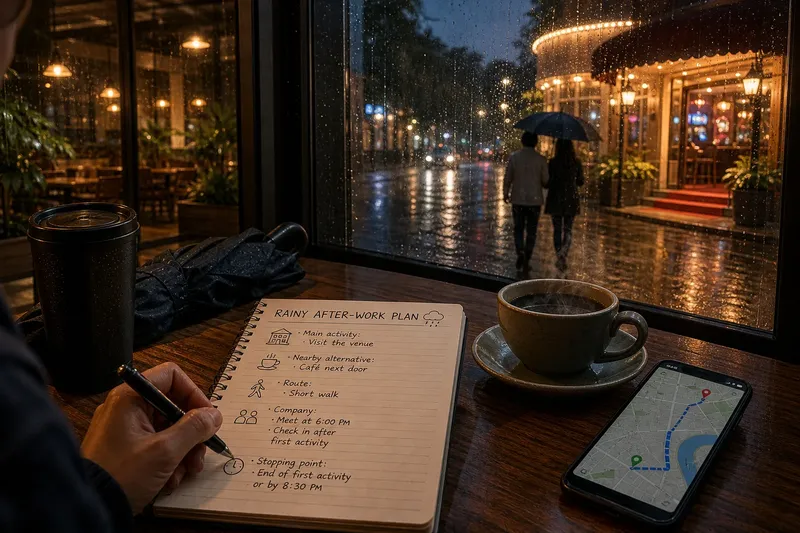
A quick note on your phone can hold the whole plan without turning it into another task:
- Main activity: Name the place or activity you would choose if the weather is manageable.
- Nearby alternative: Pick an indoor or otherwise sheltered option that does not depend on the same conditions.
- Route: Check how you would get between the two choices and how you would get home.
- Company: Agree on a meeting point and make it easy for others to opt in or leave.
- Stopping point: Decide what signals that the evening is done, such as finishing one activity or reaching a set time.
For a rainy after-work outing in Bảo Lộc, that small amount of preparation gives you room to change course without adding pressure. The main activity makes the evening feel intentional; the second route and stopping point let it remain an evening, rather than another shift to manage.