At the Desk or on the Floor: Two Service Starting Points
Desk or floor guest assistance makes different needs easier to spot. Compare fixed and roaming service to choose a starting point that fits each request.
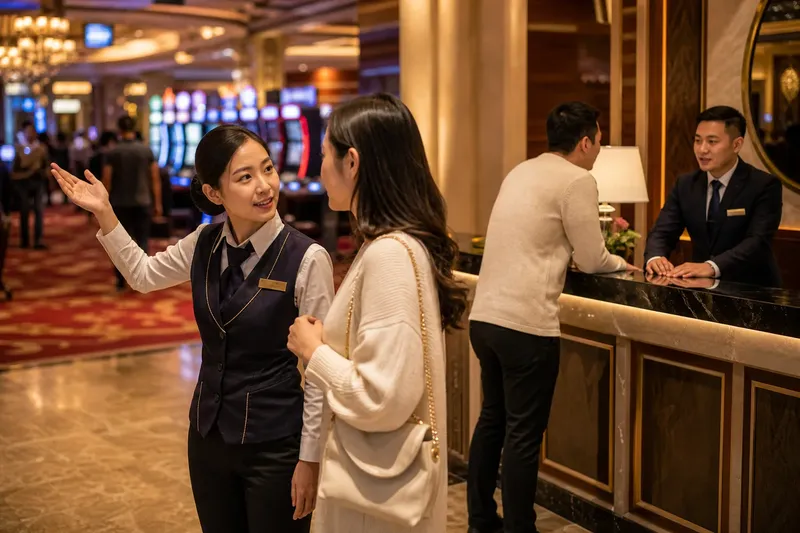
Desk or floor guest assistance shapes which guest requests a service worker notices first. At a fixed desk, people know where to ask for help; on the floor, staff can spot uncertainty before someone approaches. In a casino-style venue in Bảo Lộc, the better starting point depends on the request, the setting and how quickly it needs a response.
What does fixed-point guest assistance make easier to notice?
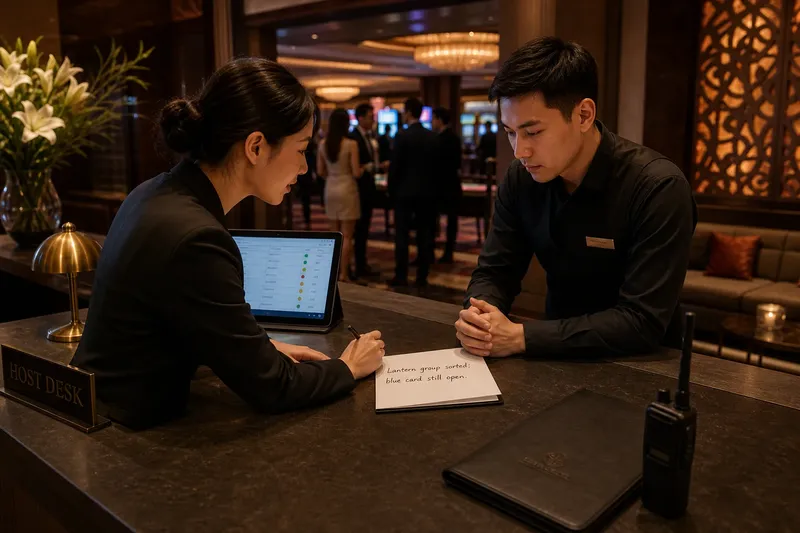
A fixed point makes direct requests easier to notice and resolve. Guests can approach a clearly marked information desk with questions about directions, venue policies, accessible routes or who to contact for a particular concern. The desk gives staff a known place to receive those questions and lets guests pause while they explain.
This setup is especially useful when a request needs a conversation, a check of written information or a referral to another service role. A guest who needs help locating a lost item, for instance, may need to describe where it was last seen. At a desk, the staff member can listen without trying to continue moving through a busy room at the same time.
There is a limit: a desk mostly serves people who know it is there and feel comfortable approaching it. Someone looking around for signs, hesitating near a corridor or trying to find an accessible route may not think to stop and ask. A fixed point is easy to identify, but it does not automatically reveal who needs help elsewhere.
What does roaming guest assistance make easier to notice?
Roaming assistance makes visible uncertainty easier to notice. Staff moving through guest areas can see someone pause at a junction, scan signs repeatedly or appear unsure about where a queue begins. A quiet offer of help can turn that moment into a simple direction before the guest has to seek out a service desk.
Movement also helps staff notice changes in the environment that affect several guests, such as a route becoming crowded or a sign being hard to see from a particular approach. The role is not to assume what a guest needs. It is to make assistance available without pressing for an explanation.
Roaming has its own constraints. Staff may be crossing between areas, responding to another request or working where conversation is difficult. A request that needs sustained attention can be hard to handle while walking. In that case, the useful response may be to listen briefly, identify the appropriate point of contact and help the guest reach it.
How should a team match the starting point to the request?
Match the starting point to the way a request becomes visible. Direct questions, private explanations and requests that involve checking details tend to fit a fixed point. Uncertainty about directions, signs or where to begin is often easier to catch through roaming presence.
These are complementary roles, not competing versions of service. A guest may first receive help from a roaming staff member and then continue a more detailed conversation at the desk. A clear referral matters: the guest should know where to go and what to expect, rather than being sent away with a vague direction.
Imagine a guest entering a venue and stopping at a junction while looking between two signs. A roaming staff member notices, asks whether the guest would like directions and points out the correct route. If the guest then asks about a venue policy that needs a careful explanation, the staff member can direct them to the information desk. The first interaction addresses visible uncertainty; the second gives space for a more involved question.
For a team deciding how to cover a service period, consider:
- Request visibility: Does the guest usually ask directly, or can uncertainty be seen from a short distance?
- Conversation length: Will the answer be brief, or could it require listening and follow-up?
- Privacy: Would a guest reasonably prefer to discuss the matter away from open foot traffic?
- Location: Is the fixed point easy to find from the entrance and main guest routes?
- Referral path: If the first staff member cannot resolve the request, can they name a clear next contact?
- Coverage: Can staff remain available at the desk while someone roams, without leaving either role unclear?
How can staff move a request from the floor to the desk?
Keep the transition short, specific and respectful. A roaming staff member can acknowledge the question, explain that the desk is the better place for the next part of the conversation and indicate its location. If the guest needs assistance getting there, offer to accompany them when the role and workload allow.
Do not make the guest repeat details unnecessarily. A brief handoff can tell the desk attendant the general topic and what has already been explained, while leaving the guest in control of what they share. For a sensitive concern, ask before passing along personal details; a helpful referral should not become an unwanted disclosure.
When the desk is busy, say so plainly and offer the available alternative, such as waiting nearby or contacting the appropriate service role. Avoid promising a wait time or outcome unless that information is known. The aim is a clear next step, not a claim that every issue can be resolved immediately.
Which service starting point fits common guest requests?
For a quick direction, a roaming staff member may be easiest to approach if the guest is already moving through the venue. For a detailed explanation, a fixed desk often offers a more settled place to talk. For an issue that is visible but unclear, roaming staff can open the conversation and help identify the right next contact.
Some requests do not fit neatly into either role. A guest may begin with a simple question and then reveal a more involved concern. Staff can adapt by listening, checking what kind of help the guest wants and moving the conversation to a suitable place when needed. Venue policy and staff responsibilities still define what each role can handle.
What do guests often want to know about desk or floor assistance?
Should I go to the desk or ask a staff member nearby?
Ask a nearby staff member for brief directions or help identifying the right service point. Choose the desk when you want to explain a more detailed question or consult information in one place.
Can a roaming staff member handle a complicated request?
They can listen and help identify the next step, but a moving role may not suit a long or private conversation. The staff member can direct you to a fixed point or another appropriate contact.
What if I cannot find the information desk?
Ask any available staff member to point it out or explain which route to take. If reaching it is difficult, say so; staff may be able to clarify the accessible route or identify another contact.
Does a fixed desk mean staff cannot help elsewhere?
Not necessarily; service arrangements vary by venue and shift. A desk provides a clear place to ask, while other staff may also assist across guest areas.
How can a venue make both starting points clear?
Make the desk visible from common guest routes with consistent signs, and make roaming staff recognizable without relying on guests to know job titles. A short, plain description of what the desk handles can also help guests decide whether to approach it.
Useful desk or floor guest assistance begins with a simple distinction: the desk catches questions people choose to bring, while roaming service catches some needs that show before a question is asked. When staff can connect those starting points with a clear handoff, guests have a better chance of reaching the right kind of help without having to guess where to begin.